
For rural wastewater management, two common solutions often come to mind. These are the septic tank and the cesspit. While both serve the purpose of handling household sewage, they differ significantly in their design, functionality and maintenance requirements. Understanding the contrast between these two systems is essential for property owners seeking the most suitable option for their needs.
Septic Tank: Efficient Treatment & Disposal
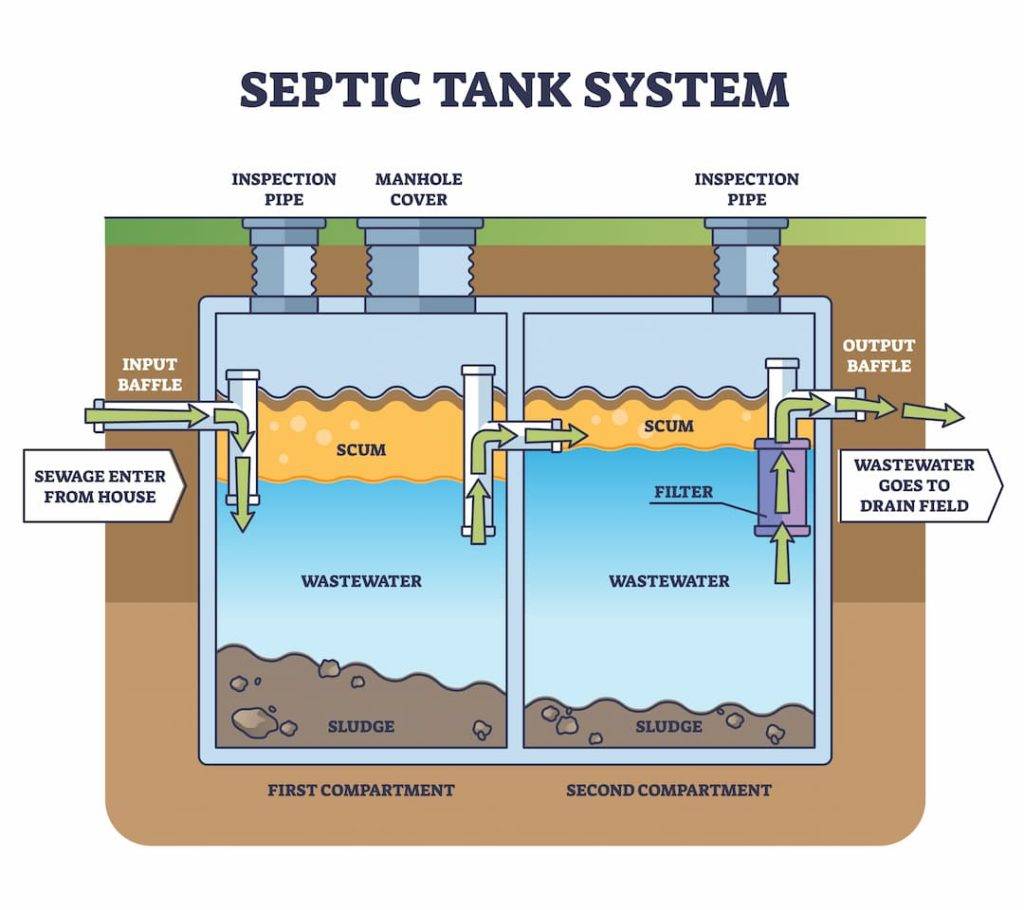
Functionality: A septic tank operates by allowing wastewater from toilets, sinks and drains to flow into an underground tank. Within the tank, solid waste settles at the bottom, forming a layer of sludge, while lighter materials float to the surface as scum. Bacteria in the tank break down the organic matter, partially treating the sewage before the liquid effluent flows out into a drain field for further filtration into the soil.
Maintenance: Regular maintenance, including periodic pumping to remove accumulated sludge and scum, is necessary to prevent clogs and ensure the system’s proper function. Additionally, avoiding the disposal of non-biodegradable items and harmful chemicals down drains helps maintain the health of the bacterial ecosystem within the tank.
Cesspit: Simple Containment System
Functionality: In contrast to a septic tank, a cesspit functions as a simple containment vessel for sewage. Wastewater from the property flows directly into the cesspit, where it is stored until it can be emptied by a tanker truck. Unlike a septic tank, there is no treatment or filtration of sewage within a cesspit. As a result, cesspits require more frequent emptying to prevent overflow and odours.

Maintenance: Due to their straightforward design, cesspits require less maintenance compared to septic tanks. However, regular emptying is essential to prevent overflows and environmental contamination. Additionally, property owners must ensure that only wastewater enters the cesspit, as the accumulation of non-biodegradable materials can lead to blockages and operational issues.
Choosing The Right Solution
When deciding between a septic tank and a cesspit, several factors come into play, including property size, soil conditions and local regulations. Septic tanks offer a more comprehensive wastewater treatment solution, making them suitable for properties with adequate space and permeable soil. On the other hand, cesspits are more appropriate for smaller properties or locations where soil conditions are unsuitable for drain fields.
Choose Pro Waste's Solutions To Your Specific Needs
In summary, the choice between a septic tank and a cesspit depends on various factors, including property size, soil conditions, and maintenance preferences. While septic tanks provide efficient wastewater treatment and disposal, cesspits offer a simpler containment solution. By understanding the differences between these two systems, property owners can make informed decisions to meet their specific wastewater management needs effectively.